
Foundation repair is one of those expenses most homeowners never plan for. One day everything seems fine; the next, you’re looking at a crack in your slab or a door that won’t close and wondering what it’s going to cost to fix it.
The good news: foundation repair doesn’t have to derail your finances. There are more ways to pay for it than most homeowners realize — and acting sooner rather than later almost always means a smaller bill. This guide walks through every realistic financing option available, what each one costs you, and how to decide which approach fits your situation.
First: Understand What You’re Actually Financing
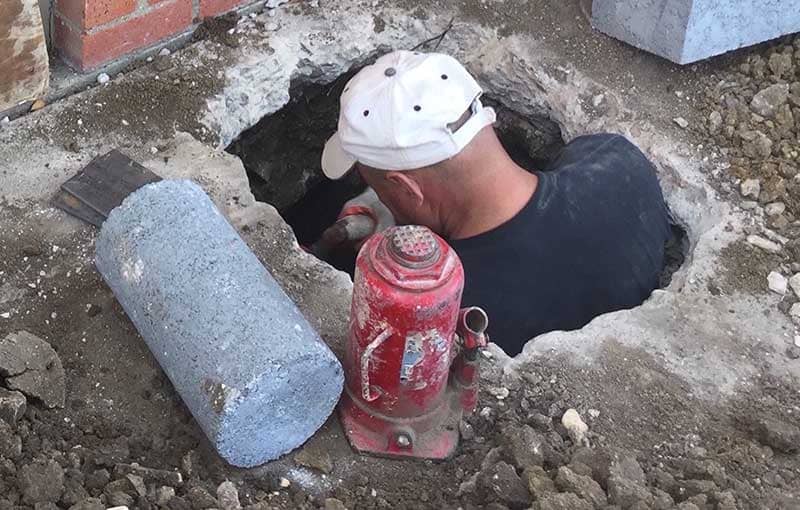
Before exploring how to pay, it helps to have a realistic sense of what foundation repair costs in the Dallas–Fort Worth area.
Costs vary significantly depending on the type of foundation, the extent of the damage, and the number of piers or repairs required. As a general reference:
- Slab foundation repair in DFW typically ranges from a few thousand dollars for minor work to $10,000–$15,000+ for more extensive pier installation. You can explore slab foundation repair cost factors in more detail on our cost guide.
- Pier and beam foundation repair tends to run somewhat lower on average, though beam replacement or extensive re-shimming can add to the total. See our pier and beam repair cost breakdown for more specifics.
The most reliable way to know what you’re facing is to get a professional evaluation first. HD Foundations provides free foundation repair estimates throughout DFW — no obligation, no cost. That number gives you something concrete to work with when exploring financing.
Option 1: Pay Out of Pocket
If the repair is on the smaller end — minor crack repair, re-shimming a pier and beam foundation, or a limited number of piers — paying cash is almost always the least expensive option overall. You avoid interest charges, keep your credit untouched, and the process is simple.
Even if you don’t have the full amount on hand today, it may be worth checking whether your timeline allows you to save toward the repair rather than financing. Foundation issues that are caught early often involve less extensive (and less expensive) repairs than those that are left to worsen.
That said, not every foundation problem can wait. If you’re seeing signs that your repair shouldn’t be delayed — rapidly widening cracks, doors that no longer latch, floors that feel noticeably uneven — financing may be the smarter move than postponing.
Option 2: Home Equity Loan

A home equity loan lets you borrow against the equity you’ve built in your home. You receive a lump sum and repay it at a fixed interest rate over a set term — typically 5 to 20 years.
Why it works for foundation repair:
- Fixed rate means predictable monthly payments
- Interest may be tax-deductible if the loan is used for home improvements (consult a tax advisor)
- Loan amounts are typically large enough to cover even significant repairs
- Interest rates are generally lower than personal loans or credit cards
What to be aware of:
- Your home is the collateral — defaulting puts it at risk
- Approval requires sufficient equity and a qualifying credit score
- The application process takes time, which may not suit urgent repairs
- Closing costs (typically 2–5% of the loan amount) add to the total cost
A home equity loan tends to be one of the most cost-effective financing routes for larger foundation repairs when you have available equity and can wait a few weeks for approval.
Option 3: Home Equity Line of Credit (HELOC)
A HELOC works similarly to a home equity loan but functions more like a credit card — you’re approved for a maximum amount and draw from it as needed, paying interest only on what you use.
Why it works for foundation repair:
- Flexibility to draw only what you need
- Variable rates (which can be lower than fixed rates initially)
- Useful if you’re doing foundation repair alongside other home improvements
- Interest may also be tax-deductible (verify with a tax advisor)
What to be aware of:
- Variable interest rates can increase over time
- Your home is collateral
- HELOCs have a draw period (often 10 years) followed by a repayment period — monthly payments can jump significantly when repayment begins
- Requires equity and credit qualification
A HELOC makes the most sense if you anticipate needing funds in stages or want flexibility beyond just the foundation repair.
Option 4: Personal Loan

Personal loans are unsecured loans — meaning your home isn’t collateral — offered by banks, credit unions, and online lenders. You receive a lump sum and repay it at a fixed or variable rate over a set term.
Why it works for foundation repair:
- No home equity required
- Faster approval than home equity products — some online lenders fund within 24–48 hours
- Fixed repayment terms make budgeting straightforward
- Useful for homeowners who haven’t built significant equity yet
What to be aware of:
- Interest rates are higher than home equity options, especially for borrowers with lower credit scores
- Loan amounts may be capped (often $25,000–$50,000 depending on the lender)
- Shorter repayment terms mean higher monthly payments
Personal loans are a practical option for mid-range repairs — particularly for homeowners who need financing quickly, don’t have sufficient home equity, or prefer not to use their home as collateral.
Option 5: Contractor Financing
Some foundation repair companies offer in-house financing or work with third-party lending partners to provide payment plans directly at the point of service. This can simplify the process considerably — you get your repair done and arrange financing in one place.
Why it works:
- Convenient — one conversation handles both the repair and the payment plan
- Often available even with less-than-perfect credit
- May include promotional offers like deferred interest or low introductory rates
What to be aware of:
- Terms vary widely — read the fine print carefully
- Deferred interest promotions can result in significant charges if the balance isn’t paid in full before the promotional period ends
- Interest rates through third-party lending partners can be higher than bank loans
If a foundation repair company offers financing, ask for the full terms in writing — APR, repayment period, any fees, and what happens if you miss a payment — before signing.
Option 6: FHA Title I Home Improvement Loan
The Federal Housing Administration’s Title I program allows homeowners to borrow for home improvements without requiring equity. Loans up to $25,000 for single-family homes are available through FHA-approved lenders.
Why it works:
- No equity required
- Government-backed, which can mean more accessible approval terms
- Can be used alongside an FHA mortgage
What to be aware of:
- Finding a participating lender requires research — not all banks offer Title I loans
- Amounts may not cover very large repairs
- Application process can be slower than private lending options
This option is worth exploring if you’re a newer homeowner without substantial equity and are looking for a federally-backed lending option.
Option 7: Credit Card (Use With Caution)
Using a credit card for foundation repair is an option, but generally the least advisable for large repairs due to high interest rates.
Where it can make sense:
- Small repairs where you can pay the balance off quickly
- 0% APR promotional cards — if you can pay the full balance before the promotional period ends, this effectively becomes an interest-free loan
- Bridging a gap while a loan is being processed
Where it doesn’t make sense:
- Carrying a large balance at standard credit card APRs (often 20–29%) makes a $10,000 repair significantly more expensive over time
- Maxing out cards can hurt your credit score, which affects future borrowing
If you go this route, have a clear plan for paying down the balance quickly.
Option 8: Government Assistance and Nonprofit Programs
Depending on your income level and circumstances, you may qualify for assistance programs that help cover home repair costs:
- USDA Single Family Housing Repair Loans and Grants — available to very low-income homeowners in eligible rural areas; grants available for those 62 and older
- Community Development Block Grants (CDBG) — administered at the local level; some cities use these funds to assist low-income homeowners with structural repairs
- State and local programs — Texas and individual DFW municipalities sometimes offer emergency home repair assistance; check with your city’s housing department
- Nonprofit housing organizations — groups like Habitat for Humanity’s home repair programs serve qualifying homeowners in some areas
These programs aren’t available to everyone, but if you’re facing significant financial hardship, they’re worth investigating before taking on debt.
How to Choose the Right Option for You
The best financing approach depends on four things:
1. How urgent is the repair?
If the damage is progressing quickly, faster financing (personal loan, contractor financing) may be worth paying a slightly higher rate for. If you have time, home equity products offer better rates.
2. How much equity do you have?
Homeowners with substantial equity have access to the most cost-effective options (home equity loan, HELOC). Those without equity will look to personal loans, contractor financing, or assistance programs.
3. What’s your credit profile?
Strong credit unlocks better rates across all loan types. If your credit needs work, contractor financing or FHA programs may be more accessible.
4. What’s the total repair cost?
Get your free estimate first. Knowing the actual number — not a rough guess — lets you match the right financing product to the right amount. You may find the repair costs less than you feared.
One More Thing: Don’t Let Financing Concerns Delay the Evaluation
One of the most common — and most costly — mistakes homeowners make is waiting to get a foundation evaluated because they’re worried about what it might cost. In reality, delaying foundation repair almost always increases the final bill. What starts as a two-pier fix can become a ten-pier project if given another year to worsen.
The evaluation itself is free. Getting a clear picture of what you’re dealing with costs nothing and puts you in a far better position to plan — whether that means acting now or making an informed decision about timing.
HD Foundations has been helping DFW homeowners navigate foundation repair for over 17 years. Our team provides honest assessments and upfront pricing so you know exactly what you’re working with before making any decisions. Schedule your free estimate today.
Frequently Asked Questions
What is the average cost of foundation repair in DFW?
Costs vary widely based on foundation type, the number of piers needed, and the extent of damage. Minor repairs may run a few thousand dollars; larger jobs involving 20+ piers can reach $15,000 or more. A free professional estimate is the only reliable way to know your actual number.
Can I finance foundation repair with bad credit?
Yes — contractor financing programs and some FHA Title I loans are designed to be accessible to borrowers with less-than-perfect credit. Personal loans are also available through some lenders for borrowers with lower scores, though at higher rates.
Is foundation repair tax deductible?
Foundation repair on your primary residence is generally not tax-deductible as a home improvement expense. However, if you finance the repair using a home equity loan or HELOC, the interest may be deductible — consult a tax professional for guidance specific to your situation.
Does homeowners insurance cover foundation repair costs?
In most cases, no. Standard policies typically exclude foundation damage caused by soil movement and settling, which are the most common causes in North Texas. See our full guide on homeowners insurance and foundation repair for a complete breakdown.
How quickly can I get financing for foundation repair?
It depends on the method. Personal loans from online lenders can fund in 24–48 hours. Contractor financing is often approved same-day. Home equity products typically take 2–6 weeks. If urgency is a factor, discuss it with your contractor — they can help you think through the fastest viable path.