
The first time someone tells you to water your house, it sounds like a joke. Lawns get watered. Gardens get watered. Concrete does not seem like it should need a drink.
But foundation watering is one of the most effective and least expensive things a North Texas homeowner can do to protect a house, and most people in Dallas, Fort Worth, Arlington and the surrounding suburbs are either skipping it entirely or doing it in a way that does not help. This guide covers why it matters here specifically, exactly how to do it, and how the routine should change as the seasons roll through.
Why Watering Matters So Much in North Texas
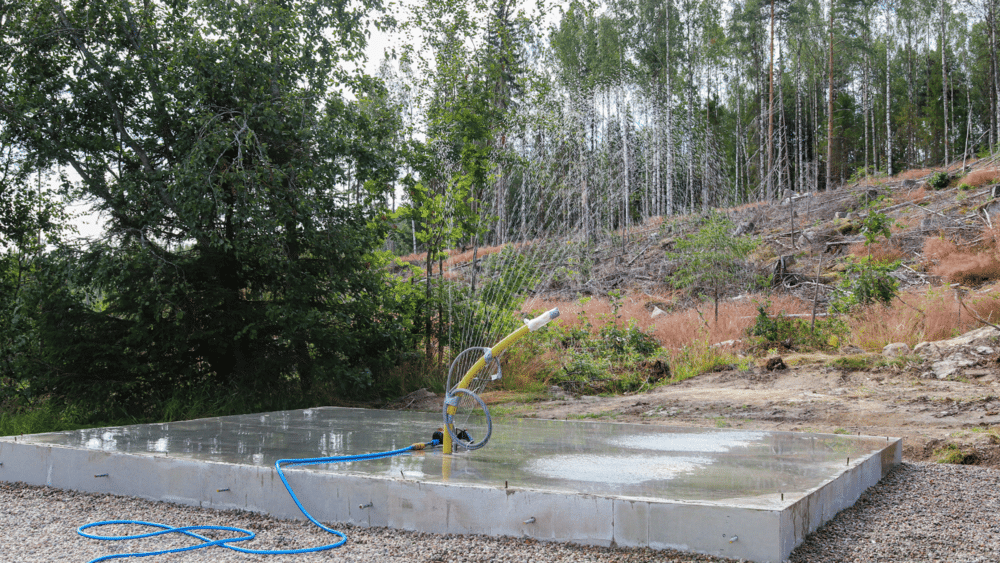
Most of the DFW metroplex sits on expansive clay soil. Expansive is the important word. This type of clay absorbs water and swells when it is wet, then releases that water and shrinks when it dries out.
Your house sits on top of that soil. When the clay swells, it pushes up. When it shrinks, it pulls away and leaves the foundation with less support than it had before. Neither one is a problem on its own. The damage comes from the swing between them, and North Texas gives us dramatic swings: weeks of triple digit heat with no rain, followed by three inches falling in a single afternoon.
The soil at the edges of your house dries out faster than the soil in the middle, because the perimeter is exposed to sun and wind while the center stays shaded under the house. That uneven drying is what causes the corners to drop, the doors to stick and the cracks to open up. You may have seen the visible version of this during a bad August, when the soil pulls away from the foundation and leaves a gap you could slide your hand into.
Watering does not fix a damaged foundation. What it does is smooth out the swing, keeping the soil around your house at a steadier moisture level so it never fully dries and contracts. If you have wondered whether the whole idea is overblown, it is worth reading why watering a foundation is not a myth.
The Goal: Steady, Not Soaked
This is the part people get wrong most often, so it is worth stating plainly before anything else.
You are not trying to saturate the ground. You are trying to keep it consistently, mildly damp, the way soil feels a day or two after a normal rain. Think of it as topping off, not filling up.
Soil that stays waterlogged causes its own set of problems, which we will get to. The target is boring, unremarkable moisture, held at roughly the same level all year.
How to Water Your Foundation Correctly
Use a soaker hose, not a sprinkler
A soaker hose is a porous hose that seeps water slowly along its entire length instead of spraying it. That slow release is exactly what clay needs, because clay absorbs water slowly. Blast it with a sprinkler and most of the water runs off across the surface before it soaks in. A soaker hose foundation setup in Texas costs very little to put together, which is part of why it has become the standard recommendation across the metroplex.
Drip irrigation works well too and gives you more control. A regular sprinkler system can work if it is the only option, but it is the least precise of the three. There is a fuller comparison in our guide on how to water your foundation correctly.
Place the hose 12 to 18 inches from the foundation
Not against it. Running water directly along the concrete can erode soil right at the edge and push moisture where you do not want it. Twelve to eighteen inches out is the sweet spot for most DFW homes, though some contractors go out to two feet on properties with heavy clay.
Lay the hose in a loose line following the perimeter of the house. Our walkthrough on using a soaker hose for foundation watering covers the setup in more detail.
Water all sides of the house
This is the mistake that quietly causes the most trouble. Homeowners water the side with the flower beds and ignore the side along the fence. That creates exactly the uneven moisture the whole exercise is meant to prevent.
Your foundation needs even treatment on all four sides. South and west facing walls take the worst of the Texas sun and dry out fastest, so if any side needs a little extra attention during a heat wave, it is usually one of those.
Water early in the morning
Between roughly 6 and 10 in the morning is ideal. Less water evaporates, and the soil has time to absorb it before the afternoon heat arrives. Evening works as a second choice.
Run it long enough to soak in, not long enough to pool
Most homes do well with 20 to 30 minutes per zone during dry stretches. The goal is moisture reaching about 6 to 12 inches deep. A short daily sprinkle that only wets the top inch accomplishes very little.
An inexpensive hose timer removes all the guesswork here and keeps you from forgetting or over-running it. Our post on how often to water your foundation breaks down run times by method.
A Season by Season Schedule for DFW
Treat these as starting points, then adjust for actual rainfall. The calendar matters less than what the sky has been doing.
Spring (March through May)
Usually our wettest stretch. Most springs, you will barely need to run the hose at all. Watch the rain instead, and pay attention to whether water is pooling anywhere along the house after a storm. Spring is the right time to check that gutters, downspouts and grading are moving water away from the foundation rather than toward it. If you find standing water that lingers, that is a drainage issue, and watering will not solve it.
Typical need: rarely, only during a dry spell of two weeks or more.
Summer (June through September)
The critical season. Watering your foundation in summer is the single most valuable habit a DFW homeowner can build, because this is when North Texas soil shrinks hard and fast, and when foundation movement most often begins.
During stretches of 95 degree and higher weather with no rain, plan on running soaker hoses most days, roughly 20 to 30 minutes per zone, early in the morning. Skip a day after a real soaking rain, but do not skip after a brief shower that barely wet the surface.
Typical need: four to seven days a week during heat and drought.
Fall (October through November)
Temperatures ease and rain usually returns, so taper off gradually rather than stopping all at once. An abrupt stop right after a hot summer creates its own sharp swing in soil moisture. Reduce to a few times a week, then less as the rain picks up.
Typical need: two to three days a week, tapering.
Winter (December through February)
Most people quit watering entirely in winter, and in a dry winter that is a mistake. North Texas gets dry, windy stretches in January and February that pull moisture out of the soil even when it is cold outside.
Water two to three times a month for 15 to 20 minutes when we go through a dry spell. Do not water when a freeze is coming or when the ground is frozen, and disconnect and drain hoses before a hard freeze. There is more on this in our guide to foundation watering during cold weather.
Typical need: two to three times a month in dry winters, none in wet ones.
What Happens If You Underwater
This is the more common failure, and the consequences build slowly:
- The soil shrinks and pulls away from the perimeter, leaving visible gaps.
- Corners and edges of the house lose support and settle downward.
- Doors and windows start sticking, and drywall cracks appear at door frames.
- Cracks open in brick and mortar, often in a stair step pattern.
- On pier and beam homes, floors begin to slope as supports shift.
What Happens If You Overwater
Less common, but real:
- Soil stays swollen and pushes upward unevenly, which is called heaving. On a slab foundation, heaving can crack concrete just as settlement does.
- Constantly saturated ground loses its load bearing strength.
- Water collects under pier and beam houses and creates damp crawl spaces, which lead to wood rot.
- Standing water near the house invites erosion and, eventually, drainage problems that need a French drain to correct.
If the soil near your foundation is squishy, if you see puddles that sit for hours, or if you smell a musty odor in a crawl space, you are past the point of helpful and into harmful.
A Simple Way to Check Your Work
You do not need a meter to gauge foundation soil moisture in North Texas. Take a long screwdriver and push it into the soil about a foot out from the foundation.
If it slides in six inches or so without much effort, your moisture level is about right. If it will not go in past an inch, the ground is too dry and you need to water more. If it sinks in with no resistance at all and comes out muddy, you are watering too much.
Do this check on each side of the house. If one side reads noticeably drier than another, that side needs more attention.
Watering Restrictions in DFW
Most cities in the metroplex, including Dallas and Fort Worth, enforce year round twice weekly limits on sprinkler irrigation. Here is the part many homeowners miss: those limits are aimed at sprinklers.
Dallas specifically permits foundations to be watered on any day of the week using a hand held hose, a drip irrigation device, a soaker hose or a bucket. Fort Worth and the North Texas Municipal Water District cities apply similar exemptions for drip and soaker hose use. Rules do shift during drought stages, so check your city’s current guidance, but in normal conditions a soaker hose running along your foundation is almost certainly allowed.
Watering Helps, But It Is Not a Repair
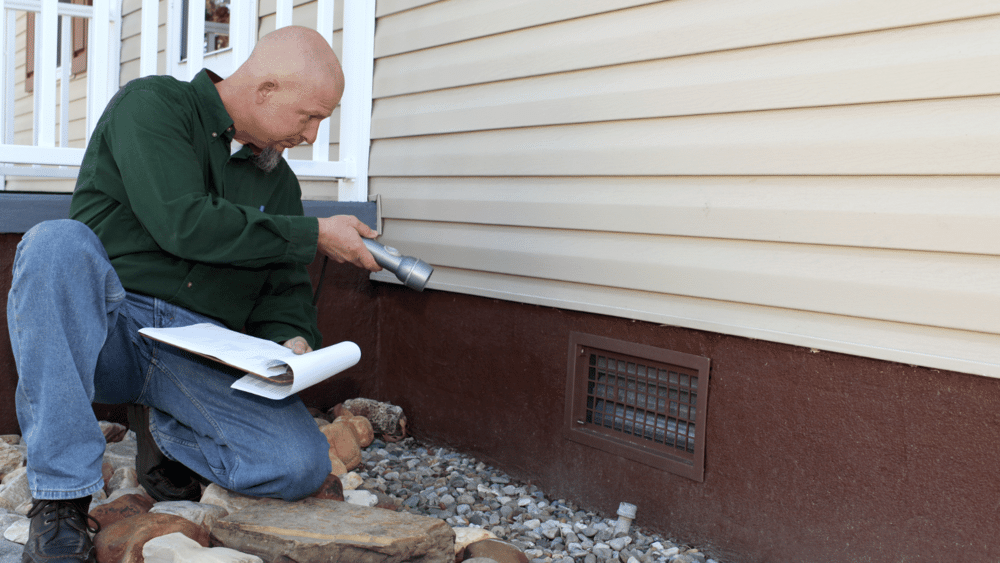
Consistent watering prevents a lot of problems. It cannot reverse damage that has already happened. If your doors have already shifted, if cracks are widening season over season, or if you can see daylight where the soil has separated from the house, the soil is telling you something a hose cannot fix. Our overview of the signs of foundation issues covers what to look for.
Watering is also only one piece of a broader routine. Grading, gutters, drainage and tree placement all affect the soil under your house. Our guide to soil moisture control puts the whole picture together.
Not Sure Where Your Home Stands?
Every property is a little different. Soil composition varies from Arlington to Plano, and a house with mature oaks 10 feet from the slab has different needs than one on a bare lot.
If you want to know whether your watering routine is doing the job, or whether movement has already started, schedule a free estimate with HD Foundations. Our evaluations take under an hour, cost nothing, and include straight answers about what your soil and foundation actually need. If the answer is that your house is fine and you just need to move a soaker hose, we will tell you that.
Call 817-226-7221 or request your evaluation online. We serve homeowners across the DFW metroplex, including Dallas, Fort Worth, Arlington, Irving, Plano, Frisco and Mansfield.