
When homeowners discover a crack running down their foundation wall or notice doors that suddenly won’t close right, the first question is often: will my homeowners insurance pay for this?
It’s a reasonable question — foundation repair can be one of the more significant home expenses a homeowner faces. Unfortunately, the honest answer is: it depends. Most standard homeowners insurance policies have very specific rules about what foundation damage they’ll cover, and the cause of the damage matters enormously.
This guide breaks down exactly how insurance treats foundation issues, which situations are typically covered, which are almost always excluded, and what you should do when you first notice a problem.
How Homeowners Insurance Approaches Foundation Damage

Homeowners insurance is designed to cover sudden and accidental damage — not damage that develops gradually over time. That distinction is the single most important thing to understand when it comes to foundation claims.
Most standard HO-3 policies (the most common homeowners policy in the U.S.) cover the structure of your home against a list of named perils. Whether your foundation repair is covered depends almost entirely on what caused the damage, not the damage itself.
When Homeowners Insurance Typically Does Cover Foundation Repair
There are specific scenarios where your policy is likely to step in:
Sudden Water Damage from a Burst Pipe or Plumbing Failure
If a pipe inside your home bursts and the water undermines or damages your foundation, that event is typically covered under a standard policy. The key word here is sudden — a pipe that bursts overnight is treated very differently from a slow leak that went unnoticed for months.
If you’ve been dealing with signs of water damage to your foundation and suspect a plumbing issue played a role, document everything carefully from the moment you discover the problem.
Fire or Explosion
If a fire or explosion damages your home’s structure, including the foundation, that’s almost universally covered under standard policies. This is a rare cause of foundation damage but is worth knowing.
Vehicle Impact
If a vehicle crashes into your home and damages the foundation as a result, the structural damage — including to the foundation — would typically be covered.
Certain Acts of Nature (Varies by Policy and Location)
Windstorm, lightning, and hail are named perils on most standard policies. If one of these events directly causes foundation damage, you may have a claim. However, coverage for earthquakes and floods is almost always excluded from standard policies and requires separate riders or policies.
When Homeowners Insurance Almost Never Covers Foundation Repair

This is where most homeowners run into frustration. The majority of foundation problems in North Texas — and across the country — fall into categories that standard policies specifically exclude.
Soil Movement and Settlement
The most common cause of foundation damage in the Dallas–Fort Worth area is the region’s expansive clay soil. When this soil absorbs moisture it expands; when it dries out it shrinks. Over time, this repeated movement causes foundations to shift, crack, and settle.
Insurance companies classify this as earth movement, which is a standard exclusion on virtually every homeowners policy. That means settlement cracks, sinking corners, and doors that stick due to shifting soil are almost never covered — regardless of how severe the damage becomes.
Poor Drainage and Gradual Water Intrusion
If water has been slowly pooling against your foundation for years and eventually caused damage, most insurers will classify this as a maintenance issue rather than a covered loss. Policies generally do not cover damage that results from neglect or gradual deterioration.
This is one reason why proper drainage around your home is so important — not just for your foundation’s health, but because gradual drainage-related damage typically falls on the homeowner to address.
Tree Root Damage
Tree roots that grow into or beneath a foundation can cause significant structural damage over time. Because this is a gradual process, it’s almost universally excluded from standard homeowners coverage.
Normal Wear and Tear
Insurance is not intended to cover the natural aging of a home. A foundation that develops minor cracks over decades due to normal settling isn’t a covered event — it’s expected deterioration.
Floods
Standard homeowners policies do not cover flood damage. If your foundation was damaged by floodwater — whether from a storm, a nearby river overflowing, or heavy rainfall that overwhelmed drainage systems — you would need a separate flood insurance policy (typically through the National Flood Insurance Program) for that damage to be covered.
The Gray Areas: What to Watch For
Some situations genuinely fall into gray areas that may be worth discussing with your insurer:
Slab leaks from plumbing: If a pipe embedded in your concrete slab develops a leak that goes on to damage the foundation, whether this is covered depends on your specific policy language. Some policies cover the resulting foundation damage; others don’t.
Sudden vs. gradual: Insurers will investigate when a claim occurred and how long damage may have been developing. A foundation crack that appears to have been growing for years is unlikely to be treated as a sudden loss even if the homeowner only just noticed it.
Code upgrades: If your home requires foundation work to bring it up to current building code during a covered repair, some policies include “ordinance or law” coverage that helps pay for those upgrades.
What To Do When You Notice Foundation Problems
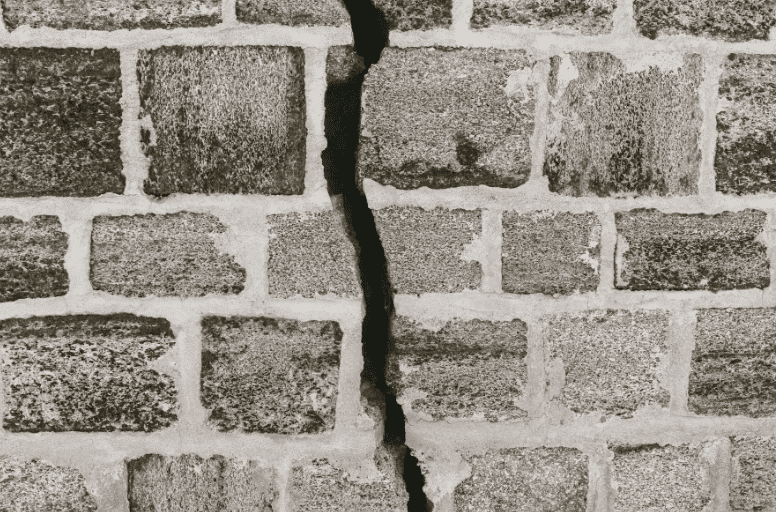
Whether or not insurance ends up covering your situation, the steps you take immediately after noticing a problem matter.
1. Document the damage thoroughly.
Photograph every crack, gap, and area of concern the moment you notice it. Note the date. This documentation is important whether you’re filing an insurance claim or simply establishing a baseline for future comparison.
2. Identify the cause if possible.
Look for obvious signs of what may have triggered the damage — a recent plumbing leak, a new drainage problem, or a significant weather event. If the cause appears to be something sudden, contact your insurer promptly.
3. Review your policy carefully.
Read the perils your policy covers and the exclusions section. Pay attention to language around “earth movement,” “settling,” “seepage,” and “gradual deterioration.”
4. Get a professional foundation evaluation.
Before filing any claim, have a qualified foundation repair contractor assess the damage. A professional evaluation gives you an accurate picture of what’s happening and what repair is needed — information your insurer will likely require anyway. HD Foundations provides free foundation repair estimates throughout the Dallas–Fort Worth area, so you can get that documentation without an upfront cost.
5. Contact your insurance company.
If you believe the damage may be covered, file a claim promptly. Late reporting can complicate or invalidate a claim. Be honest and thorough when describing what you’ve observed and when.
Should You Always File a Claim?
Not necessarily. If the cause of your foundation damage is something your policy clearly excludes — like expansive soil movement, which is by far the most common cause of foundation issues in North Texas — filing a claim may not be productive, and repeated claims can affect your premiums or insurability.
In those cases, it’s better to understand your repair options directly. The foundation repair process in DFW typically involves installing concrete or steel piers to stabilize and lift the structure — and costs vary significantly based on the number of piers needed and the extent of the damage.
What About a Home Warranty?
Home warranties and homeowners insurance are different products. Most home warranties cover mechanical systems and appliances (HVAC, plumbing, electrical) but explicitly exclude structural issues like foundation damage. Read the fine print of any home warranty carefully before assuming foundation repair is included.

The Bottom Line
For most homeowners in the Dallas–Fort Worth area, standard homeowners insurance will not cover foundation repair. The dominant cause of foundation problems here — expansive clay soil that expands and contracts with moisture — is classified as earth movement, which is a near-universal exclusion.
That doesn’t mean you’re without options. Foundation repair is a well-understood process, and the warning signs of foundation problems are often detectable early — before damage becomes severe or costly. Acting quickly when you first notice something is almost always less expensive than waiting.
If you’re seeing cracks in your walls, sticking doors, or uneven floors, the best first step is a professional evaluation. HD Foundations has been serving the DFW metroplex for over 17 years and offers free inspections with no obligation. Schedule your free estimate today and get a clear picture of what’s happening with your foundation.
Frequently Asked Questions
Does homeowners insurance cover foundation cracks?
Only if the crack was caused by a covered peril — like a burst pipe or sudden structural event. Cracks caused by soil movement, settling, or gradual water intrusion are typically excluded.
Does flood insurance cover foundation damage?
Flood insurance through the NFIP can cover foundation damage caused by flooding, but standard homeowners policies do not include flood coverage. You need a separate flood policy for that protection.
What is the most common cause of foundation damage in Texas?
Expansive clay soil is the leading cause of foundation problems across North Texas. The soil’s shrink-and-swell cycle with moisture changes puts constant stress on foundations over time.
Will filing a foundation repair claim raise my insurance rates?
Filing a claim that gets denied or paid out can both affect your premiums or your insurer’s willingness to renew your policy. Consult with your agent before filing if you’re uncertain whether the damage is covered.
Can I get my foundation inspected before calling my insurer?
Yes — and it’s often a smart move. A professional inspection gives you documented evidence of the damage and its likely cause, which helps you make an informed decision about whether to file a claim.