
Almost every foundation problem in Dallas and Fort Worth traces back to the same thing, and it is not bad construction. Clay soil foundation movement is the cause, which means the real culprit is the ground your house is sitting on.
North Texas has some of the most active soil in the country. Understanding what causes foundation movement in Dallas and the surrounding cities turns a confusing situation into a manageable one, because once you know what the soil is doing, most of the advice you have heard about foundations starts to make sense. Watering the house, cleaning gutters, keeping trees at a distance: these are not unrelated chores. They are all the same strategy aimed at the same problem.
Here is what is happening under your house, and what you can actually do about it.
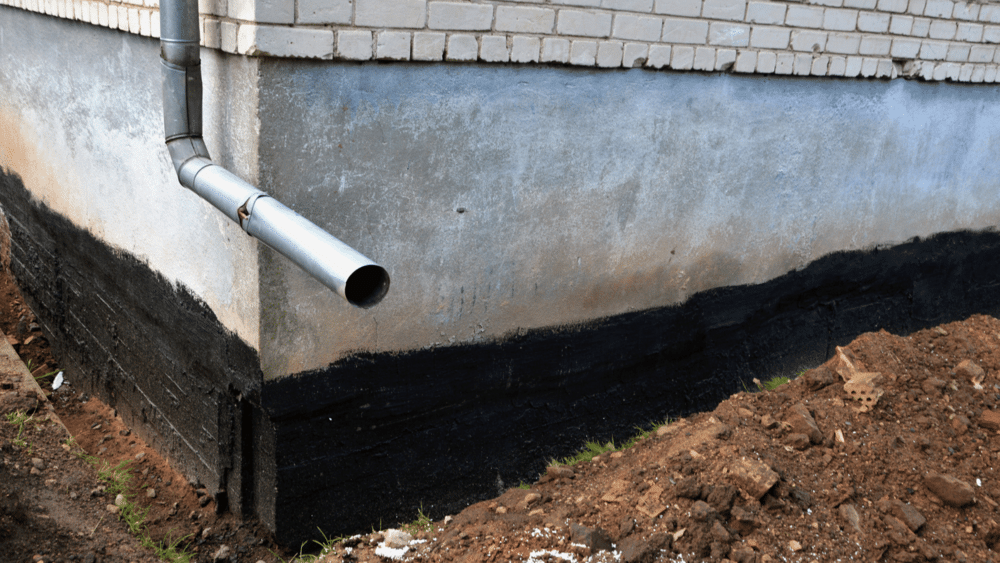
What Expansive Clay Soil Is
Soil is a mix of sand, silt and clay. The proportions determine how it behaves when it gets wet.
Sandy soil drains quickly and barely changes volume. Clay is different. Clay particles are microscopically small and flat, and certain clay minerals absorb water directly into their structure rather than just letting it pass through. When water goes in, the particles push apart and the soil expands. When the water leaves, they pull back together and the soil contracts.
Soil that does this significantly is called expansive clay, and expansive clay soil in Texas is not a subtle presence. A layer of it can change volume enough to lift a house, and a heavy concrete slab does not slow it down much. The force involved is considerable.
If you have ever seen a dried out flower bed in August with deep cracks running through it, you have seen expansive clay shrinking. Those same cracks are opening up under your foundation where you cannot see them.
Why DFW Has So Much of It
Two things combine here, and each would be manageable alone.
The geology. Much of the Dallas side of the metroplex sits on the Blackland Prairie, a band of dark, heavy clay soils that formed from ancient marine deposits. The shale and marl underneath weather into clay that is highly expansive. Fort Worth and the western side of the metroplex sit on the Grand Prairie, where there is more limestone and, in places, sandier and more stable ground.
This is why North Texas soil foundation problems are not evenly distributed across DFW. Two houses of identical age and construction, one in east Dallas and one on the west side of Fort Worth, can have entirely different histories. It also varies within neighborhoods, since builders bring in fill dirt and the original grading differs lot to lot.
The climate. This is the part that makes North Texas especially hard on foundations. Our weather does not deliver steady moisture. It swings.
A typical year runs wet in the spring, then hot and dry from June through September, sometimes with weeks of triple digit heat and no measurable rain, then wet again in the fall. Add the droughts that show up every few years and the occasional stretch of heavy rain that drops several inches in a day.
Expansive clay plus a stable climate equals minor movement. Expansive clay plus dramatic wet and dry cycles equals soil that is constantly changing volume under your house.
How the Shrink Swell Cycle Damages a Foundation
Shrink swell soil in DFW follows a predictable annual rhythm. Here is the sequence.
Spring. Rain saturates the soil. Clay absorbs water and swells, pushing upward against the foundation.
Summer. Heat and drought pull moisture out. The clay shrinks and pulls downward and away, and the soil at the perimeter dries fastest because it is exposed to sun and wind.
Fall. Rain returns. The soil rehydrates and swells again.
Winter. Cooler, usually damper, but dry windy stretches still pull moisture out.
Now here is the important part: uniform movement causes very little damage. If your whole house rose and fell together by an inch each year, you would likely never notice. Foundations are more durable than people assume.
Damage comes from differential movement, meaning one part of the house moves while another does not. And differential movement is essentially guaranteed, because the soil does not dry out evenly:
- The perimeter dries faster than the center, which stays shaded and insulated under the house.
- South and west facing sides take more sun than north and east sides.
- A large tree on one side pulls far more moisture from that area than the others.
- A downspout dumping water at one corner keeps that spot wet while the rest of the perimeter bakes.
- A plumbing leak under the slab saturates one small area continuously.
Each of those creates a moisture difference, and each moisture difference becomes a height difference. The house has to absorb that stress somewhere, and it does: in cracked drywall, racked door frames, stair step cracks in brick, and sloping floors.
Two Patterns Worth Knowing
Foundation movement in North Texas generally shows up in one of two shapes.
Edge drop, sometimes called dishing. The perimeter dries out and settles while the center stays supported, so the edges of the house sit lower than the middle. This is the common pattern after a hot dry summer, and it is what most people picture when they think of foundation settlement.
Edge lift, sometimes called doming. The opposite. The perimeter gets wet and swells, often from poor drainage or heavy rain after a drought, lifting the edges above the center. This is more common after a wet period following a long dry one, and it catches people off guard because the house is being pushed up rather than sinking.
Both produce cracks and sticking doors. An elevation survey during an inspection identifies which pattern you have, which affects what repair, if any, makes sense.
The Active Zone
One more concept that makes the repair options make sense.
Moisture change only reaches so deep. The upper layer of soil, where wetting and drying actually occur, is called the active zone. In North Texas it commonly extends somewhere in the range of eight to fifteen feet down, depending on the site.
Below that, moisture content stays relatively stable year round. The soil down there does not swell and shrink with the seasons.
That is exactly why permanent foundation repair involves driving concrete or steel piers down past the active zone to stable material below. You are not fighting the clay. You are getting underneath it, and transferring the weight of the house to ground that does not move.
What You Can Actually Do
You cannot change the soil under your house. You can change how much its moisture content swings, and that is the whole game.
Water consistently
The single most effective thing available to a homeowner. The goal is not saturation, it is steadiness: keeping the soil around your foundation at a consistent moisture level so it never fully dries and contracts.
A soaker hose 12 to 18 inches from the foundation, run on a regular schedule, all the way around the house. All sides, not just the ones with landscaping. Our seasonal foundation watering guide covers run times and how the schedule shifts through the year.
Fix your drainage
Water that collects near the house keeps one area saturated while the rest dries. That is the definition of differential moisture.
Grade the ground so it slopes away from the foundation, roughly six inches of fall over the first ten feet. Clean gutters and extend downspouts four to six feet out. If water consistently pools in the same spot, that area needs a surface drain or a French drain. Our overview of drainage systems explains which situation calls for which.
Manage trees
A mature tree can pull well over a hundred gallons a day out of the soil, drying one side of the house far faster than the rest. For a large tree close to the house, a root barrier buried three to five feet deep redirects roots away without removing the tree. Our guide on tree roots and foundation damage covers species risk and why removal can backfire.
Catch plumbing leaks
A slab leak steadily saturates soil in one location and can cause movement that looks exactly like normal settlement. Watch for unexplained increases in your water bill, warm spots on the floor, or the sound of running water when nothing is on.
Keep landscaping sensible
Avoid heavy watering in beds against the house while the rest of the perimeter goes dry. Mulch helps hold moisture steady. Do not build up beds so high that water drains toward the foundation.
Watch, and write it down
Check your house each fall and spring. Note new cracks, photograph them with a coin for scale, and see whether anything changed. Our guide on which foundation cracks are normal and which signal a problem explains how to read what you find.
The Realistic Expectation
Some movement is normal in a North Texas home. A house that has settled slightly over thirty years, with a few hairline cracks and a door that catches in August, is a normal Texas house, not a damaged one.
What you are trying to prevent is the large, uneven movement that comes from neglecting moisture entirely: no watering through a drought, a downspout draining at the foundation for years, a thirsty tree with no barrier. Those are the conditions that turn ordinary soil behavior into a repair bill.
The homeowners who avoid problems are not the ones with better soil. They are the ones who keep the moisture around their house boring and consistent.
Want to Know What Your Soil Has Already Done?
An inspection includes an elevation survey that shows how much your foundation has actually moved and in what pattern, which is information you cannot get by looking at cracks alone.
Schedule a free estimate with HD Foundations. Our evaluations take under an hour, cost nothing, and end with a straight answer, including the answer that your house is stable and your routine is working. If repairs are warranted, our work carries a lifetime transferable warranty that passes to the next owner.
Call 817-226-7221 or request your evaluation online. We serve homeowners across the DFW metroplex, including Dallas, Fort Worth, Arlington, Irving, Plano, Frisco and Mansfield.